


Press "Enter" to skip to content

Even Grounds Posts

Even Grounds offers holistic accessibility consulting for travel and tourism: tactile maps, 3D replicas, museum consulting, training, and accessibility audits.

My consulting services

Selected clients

Even Grounds is trusted by organizations of all sizes, from global corporations and government agencies to museums, cultural institutions, and nonprofits.

Dell
KPMG
Bank of Canada Currency Museum
U.S. Patent and Trademark Office
Allen Memorial Art Museum
Featured

Accessible tactile 3D printed restroom maps for blind visitors

If you are blind, when you visit a restroom by default you will end up touching many more things than sighted people to find the same facilities. Wouldn’t it be great to minimize contact with things you wouldn’t need to touch in the first place?

This is why I invented the accessible tactile 3D printed restroom maps.

A tactile restroom map is a 3D-printed miniature replica of a restroom’s layout, mounted beside the ADA sign, that blind visitors can feel before entering.

When a blind person visits a restroom, before they enter they can quickly examine a map of the exact layout of the restroom so they can go exactly where they want to without having to explore and accidentally touch more than necessary.

accessible tactile restroom map including a sink, toilets, urinals, paper holders, hand dryer and doors.

4 Comments

Running effective accessibility committee meetings

If you are chairing an accessibility committee, you already know how to run a meeting. You have run plenty of them, in different jobs and different rooms, and this chapter is not going to teach you the basics. Think of it instead as a roundup of what tends to work in the particular context of an accessibility committee meeting, collected from committees that worked and from ones that quietly fell apart. Most of it applies to meetings in general, and you will recognize a good deal of it from your own experience. But there are many kinds of meetings in life, and this chapter is about this one.

Leave a Comment

Tactile Revolution, an exhibit of art meant to be touched

Yesterday I attended an art exhibit done by the Clovernook Center for the Blind and Visually Impaired that was so special to me. The exhibit is called Tactile Revolution, where people are invited to touch different tactile designs, braille and 3D models.

The reason why I was there is because many of the objects, about more than two dozens which are exhibited were done by my company.

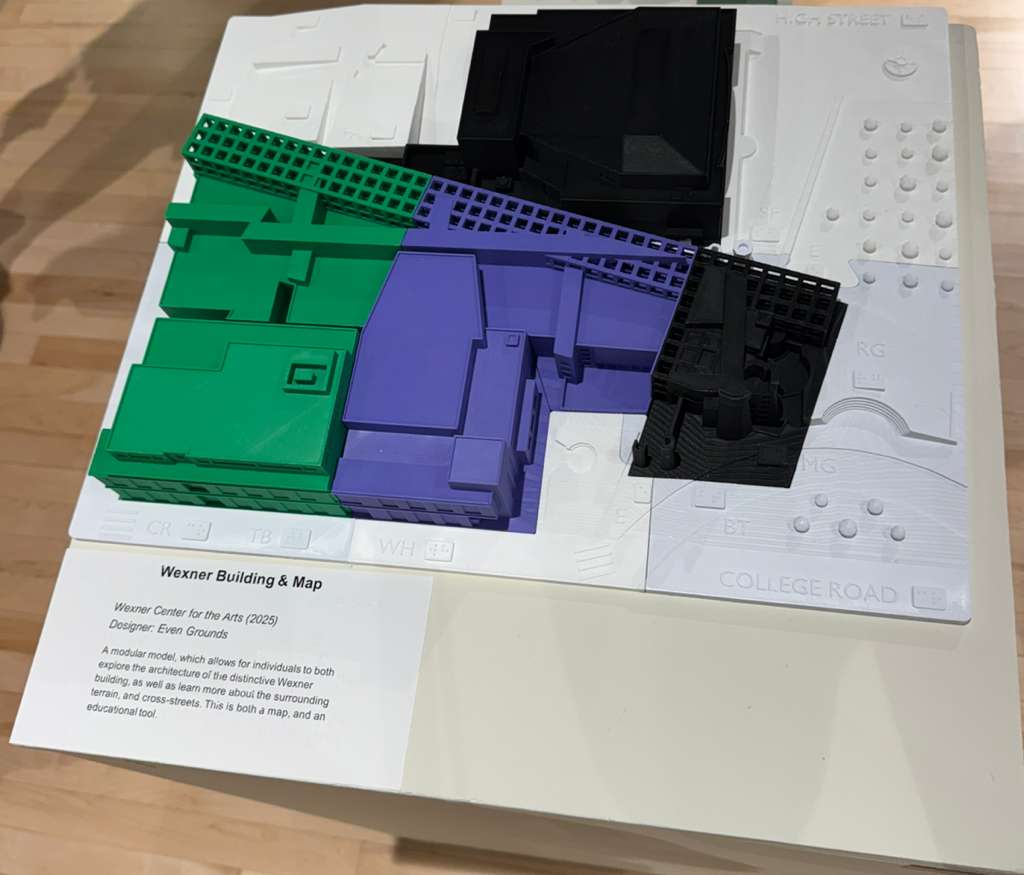
Tactile map of the Columbus Wexner Center for the Arts, including building replicas

Leave a Comment

Blind people, faces, and the Signers’ Hall

Showing faces to blind people has been a challenge I have been trying to research and resolve for many years. When a face is transferred into a 2D or a 3D form and features are made so that the are enjoyable through a tactile experience, a lot is lost that is still available when looking at a live human, or a photo.

While there are many tactile representations of people, there is much less information about how recognizable those pictures, statues or 3D replicas are.

1 Comment

The Museum of the American Revolution in Philadelphia

I just returned from Philadelphia where I had an opportunity to attend an amazing tactile tour at the Museum of American Revolution. This exhibit overall talks to anyone, anywhere from kids who just hear about the revolution for the first time, or someone who is involved with US history.

We toured the museum with the team from the Clovernook Center who did much of the tactile objects for the museum. Our tour was led by Meg Bowersox, but a self-guided tour is also available, more about it later.

Leave a Comment

3D printed accessible biology study tools

Over the last couple of years, Even Grounds has been working on a very rewarding project with the Clovernook Center for the Blind and Visually Impaired. We are creating 3D printed tactile objects for schools for the blind around to world to help the teaching of biology.

The way this program works is that they build relationships with schools for the blind from around the world, ship 3D printers and printing materials to them, together with 3D design files. This way, at a much lower cost than sending each piece individually, schools can print and distribute their materials locally.

Leave a Comment

Meta Ray-Ban glasses may change how blind people travel

On Friday, June 12, 2026 Mark Zuckerberg announced a donation of approximately 130000 Meta Ray-Ban glasses to blind veterans. The goal is to provide each blinded veteran with one in the United States. This does not mean that they will now start mailing one out to each eligible person. Rather, people who can prove eligibility will be able to request one from the Blinded Veterans Organization or from any of their partners. Most likely over the next few days we are going to receive more information.

This distribution will be somewhat similar to how eligible blind people can receive a digital book reader, or a currency recognizer.

Leave a Comment